Implementing Freight Audit and Payment Services: A Stepwise, Practical Plan
Rolling out freight audit and payment services successfully comes down to three things: a clear plan, reliable data and strong governance. The phased approach below is designed to reduce risk and get the most value from your investment, with specific steps, milestones and signs of success at every stage.
Phase 1: Set Your Goals and Scope
Start by deciding what you want to achieve. Common goals include lowering costs, speeding up settlements and reducing billing disputes. Once your objectives are clear, use them to define the scope of the project.
Bring stakeholders together, agree on measurable targets and decide which lanes, transport modes and regions will be included. Write down the outcomes you expect so they can guide decisions throughout the rest of the project.
Phase 2: Check That Your Data Is Ready
Your audit system is only as good as the data feeding it, so confirm that the information you need is available, accurate and compatible.
Build an inventory of data from your TMS, ERP and carrier invoices. Look for gaps, and put rules in place for cleaning, standardizing and enriching the data so it's ready to use.
Phase 3: Choose Your Model and Set Up Governance
Decide whether you'll keep auditing in-house and outsource the execution, or hand the entire process to an outside provider. Then put a governance structure in place.
Weigh the level of control you want against the efficiency you need. Define who owns each part of the process, how approvals work and how issues get escalated. Create a clear set of rules for validating rates and handling disputes.
Phase 4: Map Your Data and Connect Your Systems
Match freight audit and payment services company your data fields to the audit platform and plan how your systems will connect.
Outline how data will flow, whether through API or EDI connections or batch uploads. Set up regular data quality checks and ongoing monitoring to catch problems early.

Phase 5: Prove the Value with a Pilot
Before rolling out across your whole operation, test the approach with a small but representative pilot.
Choose a mix of carriers, track your agreed KPIs and fine-tune your configuration based on what you learn. A successful pilot also gives you hard evidence of ROI to share with leadership.
Phase 6: Scale Up and Keep Improving
Once the pilot has proven its worth, expand the program to more lanes and higher volumes while continuing to refine it.
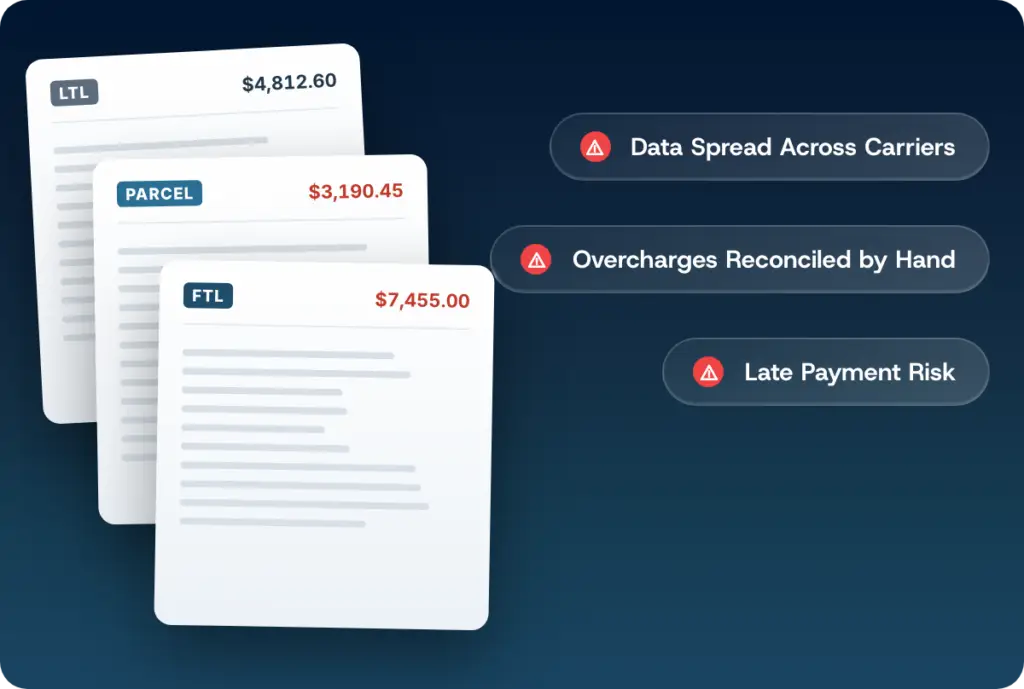
Keep tracking savings, cycle times and how efficiently disputes are resolved. As volumes grow, update your governance rules and data mappings to keep everything running smoothly.
Tips for a Smoother Setup
- Create a shared data dictionary and one trusted source for rates, charges and credits.
- Keep user training short and tailored to each role.
- Maintain clear change logs to support audits and governance.
A Phased Path to Lasting Results
Taking a disciplined, step-by-step approach makes freight audit and payment services practical, scalable and valuable for organizations of all sizes. By keeping governance and data quality front and center, you set your program up for long-term success.
FreightOptics provides an integrated spend-management ecosystem for modern supply chains. By consolidating multi-modal shipping data into a single cloud platform, applying ML-driven contract modeling, and delivering proactive BI dashboards, it enables swift issue resolution, precise cost control, and sustained savings. With end-to-end support from onboarding to optimization, clients typically realize meaningful reductions in freight spend and a clear ROI for finance, procurement, and operations.
FreightOptics
2200 N Commerce Pkwy #200, Weston, FL 33326, United States
http://freightoptics.com/
+18005784939